Dice Words - Fun Word Game
- 4.9
- Rating
- 1.00M
- Installs
- Free
- Price
 Analysis by App-foxy
I found Dice Words easy to understand within a few minutes, but its real appeal is not simply that it is a word game. It turns word-building into a compact dice-based activity that works especially well when I want something social, light, and quick to pick up. The store summary calls it a great word game with friends, and that description fits the central experience better than treating it as a solitary vocabulary trainer.
FunCraft Games presents it as a free game in the word category, with an Everyone content rating. It runs on Android devices using version 7.0 or later, and the current version is 2.0.24511. The game has passed the early-adopter stage too: it has more than a million installs, an average rating of 4.8 from roughly fifty-nine thousand ratings, and about five thousand written reviews. Those figures suggest a healthy audience, although popularity alone does not guarantee that its pace or presentation will suit every player.
How Dice Words feels to use in everyday play
I like how Dice Words keeps the central task in view: the letters on the dice are the puzzle, and choosing what to make of them is the interesting part. In this section, I’ll look at how that focused format shapes ordinary sessions, then turn to the situations where it feels most rewarding.
You May Also Like

 Blood Strike: 2.5 Anniversary
Blood Strike’s Loadouts Turn Every Drop Into a Tactical Gamble
A close look at Blood Strike’s custom loadouts: how fast access to signature weapons reshapes its battle royale rhythm, rewards preparation, and narrows the gap between fights.

 Pandora - Music & Podcasts
Pandora’s Music Is Easy to Start, but Harder to Recover
Pandora’s strength is its low-effort path from a seed to a station. Its weak spot is how much confidence it asks you to place in connection, setup, and quiet recovery.

 8 Ball Pool
 Is Built on Rivalries, Rematches, and Routine
A close look at the rivalries, rematches, shared routines, and unanswered safety questions that turn a quick pool match into a persistent mobile community.

 Samsung Music
’s Quiet Strength Is Playing What You Already Own
Its reach comes less from spectacle than from dependable access to a personal library. That simplicity is both the app’s strongest retention engine and its ceiling.

 AccuWeather: Weather Radar
AccuWeather Review: A Quick, Clear Forecast for Everyday Decisions
For everyday plans, the best forecast is the one you can understand quickly. AccuWeather makes rain timing, radar, and local conditions easy to act on, with a few trade-offs.

 Hill Climb Racing
Why Hill Climb Racing Still Turns Crashes Into One More Run
A tiny car, a bumpy hill and one more upgrade: Hill Climb Racing keeps resurfacing because its simple chaos makes every near-miss feel personal.
More From Our News Desk



Readable enough for quick decisions
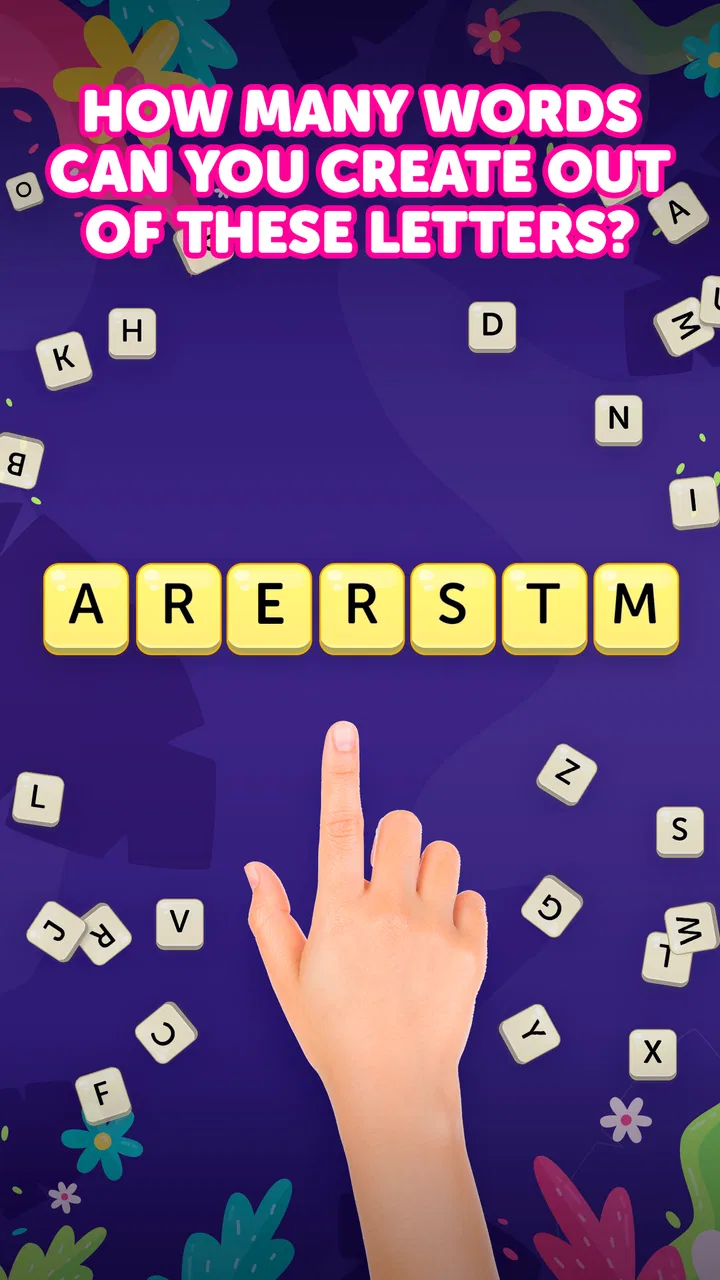
My first impression was that the game is built around a simple visual task: look at the available dice and decide what word-making opportunity is worth pursuing. That matters because a word game can become tiring when the screen is crowded with decorative elements or when the player has to search for the important information. Here, the concept is direct enough that I could focus on letters and choices rather than learn a complicated ruleset.
The strongest readability advantage is the limited mental distance between seeing the game state and knowing what to do next. I do not need to understand a large map, a long campaign structure, or a complicated inventory before making progress. For a player who prefers familiar visual patterns and short instructions, that makes the opening much less intimidating than a typical strategy game.
There is also a useful distinction between being easy to understand and being easy to master. The basic idea is approachable, but finding the best word under pressure still requires attention, spelling confidence, and a willingness to reconsider an obvious choice. I enjoyed that tension because the game does not feel like a passive vocabulary quiz. At the same time, anyone who needs more time to inspect letters may find the social or competitive rhythm less comfortable than a completely untimed word puzzle.
I would recommend beginning with a relaxed session rather than trying to play at maximum speed. My practical tip is to scan the dice in two passes: first look for short words that are immediately visible, then check whether a longer combination is worth delaying for. That habit reduces the feeling of staring at a jumble of letters and gives players with different reading speeds a more manageable routine.
Navigation that favors the main activity
Dice Words is at its best when I want to open a game and get to the word-making quickly. Its identity is clear from the first interaction: this is not a broad collection of unrelated mini-games or a word-learning course with lessons hidden behind several menus. That focus helps players who get lost in layered interfaces or who simply do not want to spend their available time configuring a session.
The friend-oriented design also changes how I think about navigation. A social word game is not only about the board itself; it is about moving between a personal decision and a response from another person. That can be enjoyable during a short break, but it also means the experience depends on how comfortable the player is with turn-based or shared play. Someone looking for a fully private, uninterrupted puzzle may prefer a conventional solo crossword or an offline word search instead.
One useful workflow is to treat each round as a small mental reset. I do not need to reserve a long evening for it. I can play while waiting for an appointment, put it down when something else needs attention, and return later without having to remember a large story or a complex chain of objectives. That makes it more practical than many word games that demand a long uninterrupted session.
Motor demands are modest, but precision still matters
From a motor perspective, the core interaction appears less demanding than games that rely on rapid swipes, repeated tapping, or accurate movement through a three-dimensional space. The player’s main challenge is choosing letters and forming words, so the physical workload is relatively light. That makes the game a plausible option for someone who enjoys mobile play but does not want an action-heavy control scheme.
Still, “light” does not mean universally effortless. Selecting small on-screen elements can be uncomfortable for players with reduced fine-motor control, hand tremors, or difficulty maintaining a steady touch. The game’s word challenge may be mentally accessible while the act of tapping the correct item remains frustrating. I would test it briefly on the intended device before committing to longer sessions, especially if touch accuracy is a concern.
A second trade-off is the relationship between speed and control. If a player can make decisions quickly but needs extra time to tap accurately, the game may feel more stressful than its simple rules suggest. Conversely, a careful player who can take their time may enjoy the same system much more. I found that using a stable grip and playing on a larger phone made the letter-selection task feel less cramped than using a small screen one-handed.
The most useful adjustment is behavioral rather than technical: avoid playing while walking, riding in a moving vehicle, or carrying something in the other hand. Those situations make a precision-based word choice harder and can turn a calm puzzle into a sequence of accidental taps. Dice Words suits stationary micro-breaks better than distracted mobile use.
Visual and sensory comfort depends on the player
Word games naturally put visual emphasis on letters, and this one is no exception. Players who are comfortable reading short strings on a phone should find the basic concept approachable, but people with low vision, color-vision differences, or sensitivity to visual clutter should judge the actual presentation on their own device. I would not assume that a simple ruleset automatically means every visual element is equally easy to distinguish.
My preferred way to play is in a quiet setting with the screen brightness adjusted to the room. That is not a special feature of the game; it is simply a realistic way to reduce eye strain when the player must repeatedly inspect individual letters. I also found that taking a short pause between rounds helped more than trying to force one long session.
For players who are sensitive to interruptions, social play can introduce a different kind of sensory pressure from the board itself. Waiting for another person, receiving a response, or feeling that a turn should be completed quickly may be more distracting than the visual layout. The game is therefore a better fit for someone who enjoys gentle competition than for someone who wants a silent, predictable puzzle environment.
Useful in short, ordinary situations
A realistic example is a lunch break when I have ten minutes and want more interaction than a passive video but less commitment than a full game. I can make a few word decisions, stop when the break ends, and return later without needing to reconstruct a complicated narrative. It also works as a low-pressure activity to share with a friend who enjoys words but does not want to learn a large set of rules.
Another good setting is a relaxed evening when two people want a small competitive activity beside a conversation. Because the central idea is recognizable, the game can be easier to introduce than a card game with several phases or a board game that requires setup. The word focus gives the interaction a clear subject, while the dice add uncertainty and prevent it from feeling exactly like a standard crossword.
That same simplicity limits its usefulness in other contexts. I would not choose it as a serious study tool for learning a language, because making words in a game is not the same as receiving structured explanations, pronunciation practice, or a planned vocabulary curriculum. I also would not pick it for a player who wants a deep solo campaign, character development, or a strong narrative reason to keep returning.
How it compares with familiar word-game alternatives
Compared with a crossword, Dice Words feels more immediate and less dependent on solving a fixed grid. A crossword rewards sustained clue interpretation and careful completion, while this game puts more emphasis on reacting to the letters currently available. If I want a quiet, methodical puzzle, a crossword is probably the better choice. If I want a quicker exchange with another person, the dice format has the advantage.
Compared with a word-search game, it asks for more active construction. A word search often rewards visual scanning across a prepared field, whereas Dice Words makes me decide which letters can become a useful word. That can feel more creative, but it may also expose spelling uncertainty more directly. Players who enjoy spotting hidden words may prefer the predictable structure of a word search.
Compared with a traditional tile-based word board game, the dice approach feels less like planning a permanent board position and more like responding to a changing hand of possibilities. That can be refreshing for casual players, though people who love long-term placement strategy may find it less satisfying. The trade-off is clear: faster access and lighter commitment in exchange for less of the deliberate board management found in classic alternatives.
What the free download means in practice
The game is free to download, which makes it easy to try without making an upfront purchase. It includes in-app purchases ranging from $0.99 to $49.99 per item. I would keep that range in mind before handing the game to a child or setting it up on a shared device. The Everyone rating describes the intended age suitability, but it does not remove the need for an adult to manage purchasing habits.
For me, the sensible approach is to play the free experience first and decide whether the core word-and-dice loop is enjoyable before considering any optional spending. A purchase cannot fix a mismatch in pace, readability, or social preference. If the game already feels too quick, too visually demanding, or too dependent on another player, paying for extras would not address the underlying issue.
The release date of August 25, 2023, also places it in a relatively recent generation of mobile games rather than an old-style word utility. FunCraft Games has continued to identify the product through its current version, 2.0.24511. I see that as useful context for someone deciding whether to try it on an older device, although the stated Android requirement is the more important practical check: the phone or tablet needs Android 7.0 or later.
Who will enjoy it, and who should skip it
I think Dice Words is a strong match for casual word-game players who like short decisions, friendly competition, and a ruleset that can be understood without a long tutorial. It is particularly appealing if you already enjoy making words but want something less static than a crossword. The large audience and high average rating are encouraging signs for someone looking for a well-established option rather than an obscure experiment.
I would also suggest it to families and friends who want a shared activity with an Everyone rating, provided an adult keeps an eye on in-app purchases. Its social angle can make ordinary downtime more engaging, and the dice element gives each session a different starting point instead of presenting exactly the same kind of puzzle every time.
I would skip it if your priority is accessibility control rather than accessible simplicity. A straightforward concept helps, but it is not a substitute for adjustable text, carefully configurable contrast, alternative input methods, or other tools that some players depend on. I would also skip it if you dislike waiting for other people, feel uncomfortable making word choices under pressure, or want a fully offline-feeling solo experience with no social rhythm.
My inclusive verdict after using it
My overall view is positive, with an important qualification: Dice Words supports inclusion best through its approachable idea and modest physical demands, not through a long list of specialized options. I found it easy to explain, easy to fit into a short break, and more socially inviting than many solitary word puzzles. Those qualities can make a meaningful difference for new players who are put off by complex controls.
At the same time, players should separate cognitive simplicity from complete accessibility. Reading speed, touch precision, visual comfort, and tolerance for competitive timing can all change the experience. The fairest recommendation is to try a short session on the device that will actually be used, preferably in a calm setting, and notice whether the letters remain comfortable to inspect and select.
My bottom line: this is a free word game worth trying if you want a friendly dice-based alternative to crosswords and word searches, especially for brief social play. I would recommend it to a friend who enjoys constructing words but does not need a deep campaign. I would point that friend toward a more configurable or purely solo alternative if they need specific accessibility controls, dislike time pressure, or want structured language learning rather than playful word-making.
FAQs for Dice Words - Fun Word Game
01What is Dice Words - Fun Word Game about?
Dice Words - Fun Word Game is a word puzzle app that combines the excitement of dice rolling with word-building challenges. Players roll virtual dice to generate letters and then create words from these letters to score points. The game offers various modes, allowing users to play solo or compete with friends, making it both entertaining and educational.
02Is Dice Words - Fun Word Game suitable for all ages?
Yes, Dice Words - Fun Word Game is designed for players of all ages. Its user-friendly interface and adjustable difficulty levels make it accessible for children, yet challenging enough for adults. The game encourages vocabulary development and strategic thinking, making it a fun educational tool for families and classrooms alike.
03Does Dice Words - Fun Word Game require an internet connection?
While Dice Words - Fun Word Game can be played offline, certain features, such as multiplayer mode and global leaderboards, require an internet connection. Offline play is available for solo modes, ensuring that users can enjoy the game anytime, anywhere without needing to be connected.
04Are there in-app purchases in Dice Words - Fun Word Game?
Yes, Dice Words - Fun Word Game offers in-app purchases. Players can buy additional features such as bonus packs, extra rolls, or ad-free experiences. While the core game is free to play, these optional purchases can enhance gameplay and provide additional convenience and enjoyment.
05How can I improve my skills in Dice Words - Fun Word Game?
Improving skills in Dice Words - Fun Word Game involves regular practice and strategic thinking. Players should focus on expanding their vocabulary and experimenting with different word combinations. Utilizing power-ups wisely and observing opponents’ strategies in multiplayer modes can also provide valuable insights and competitive advantages.
Pros
- Engaging gameplay with simple mechanics.
- Wide variety of words to discover.
- Offline mode available for travel.
- Minimal ads for uninterrupted play.
- Challenging levels keep players hooked.
Cons
- Limited hints can be frustrating.
- Occasional lag on older devices.
- Some levels feel repetitive.
- In-app purchases can be pricey.
- Lacks multiplayer mode for competition.

Dice Words - Fun Word Game
Gallery